Your listings load fast, your IDX search actually filters the way buyers expect, and every lead lands straight in the CRM you already run. No bloated real estate themes, no MLS feeds that break on every board renewal.
Real estate websites built to convert listings
The problem, reframed
Most real estate sites aren't broken, they're incomplete. A theme got installed, an IDX plugin got bolted on, and nobody ever tuned the parts that decide whether a buyer stays on a listing page or bounces to Zillow instead.
My read: the real decision isn't "which real estate theme looks best," it's "who's going to own the IDX feed mapping and the search index six months from now, when your MLS board changes its data format again." That's the axis that actually determines whether the site survives a renewal cycle.
We take over half-finished builds, tune ones that are slow under listing-image load, and build new ones from a clean schema when that's the right call. Same positive-asset standard either way: optimize, refine, and complete, never patch and pray.
What we build
01
IDX/MLS integration
Listing data comes in through RESO Web API where the board supports it, RETS where it doesn't. Fact: RESO Web API is now the standard most MLSs are migrating toward, but plenty of regional boards still run RETS feeds, so the integration has to handle both without the front end knowing the difference.
02
Property search that actually filters
Price range, beds/baths, square footage, lot size, school zone, and map-radius search on Google Maps or Mapbox, backed by a properly indexed database so a filtered search on a 5,000-listing feed doesn't crawl. Faceted search built to update in place, not reload the page on every filter click.
03
Listing pages tuned for Core Web Vitals
Real estate pages live or die on image weight. Lazy-loaded galleries, responsive image sizing, and LCP tuned specifically for the hero listing photo, since that's almost always the largest contentful element on the page.
04
Schema markup for search visibility
RealEstateListing and SingleFamilyResidence structured data per property, plus Organization and FAQ schema site-wide, so listings are eligible for rich results instead of competing as plain blue links.
05
Virtual tours and media embeds
Matterport, video walkthroughs, and drone footage embedded without tanking page speed, deferred and lazy-loaded rather than auto-playing on load.
06
Lead capture that routes correctly
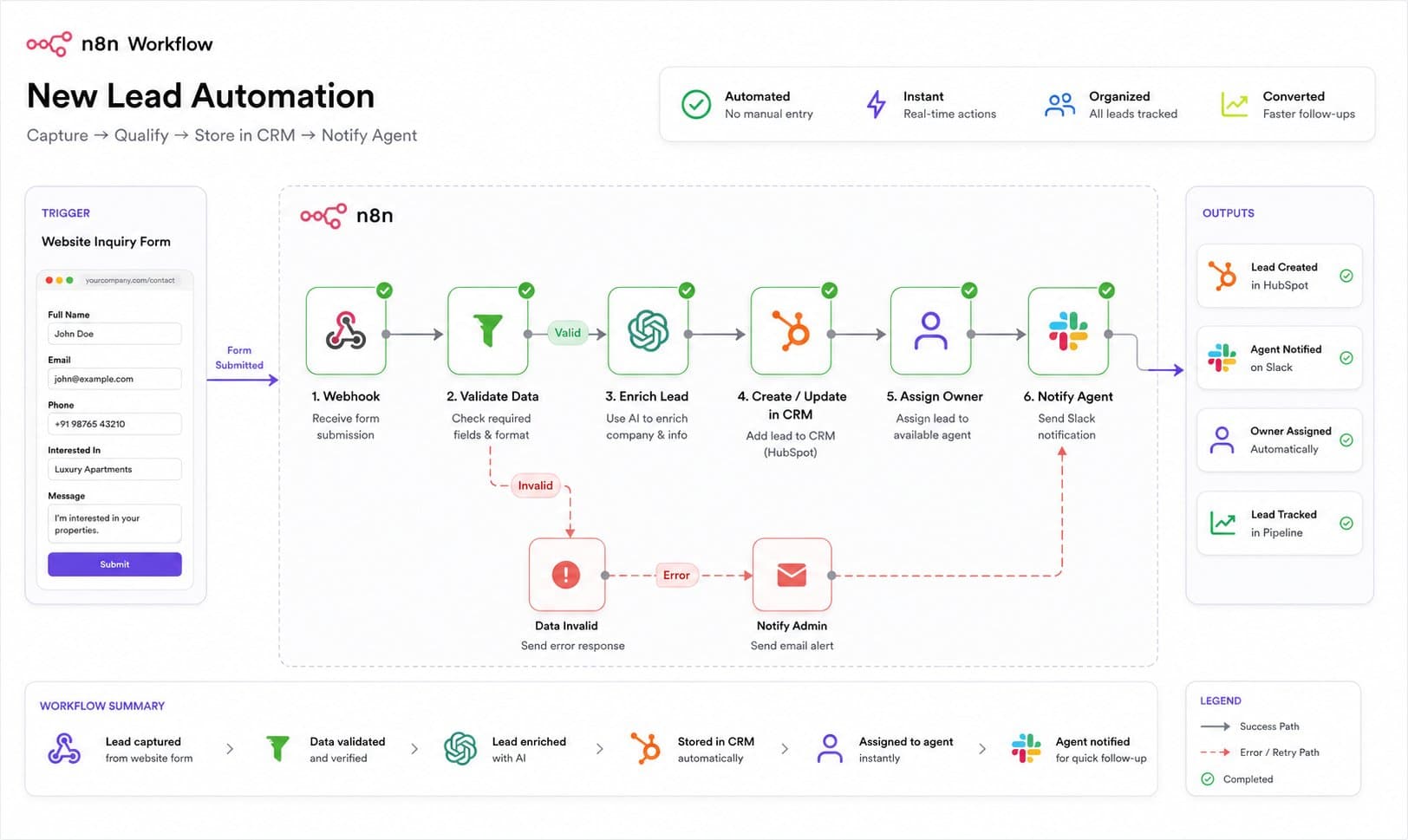
Inquiry forms, saved-search sign-ups, and "schedule a showing" flows that push straight into the CRM you're already running (Follow Up Boss, kvCORE, or your broker's platform of choice), not into a spreadsheet someone has to check manually.
07
Agent and broker dashboards
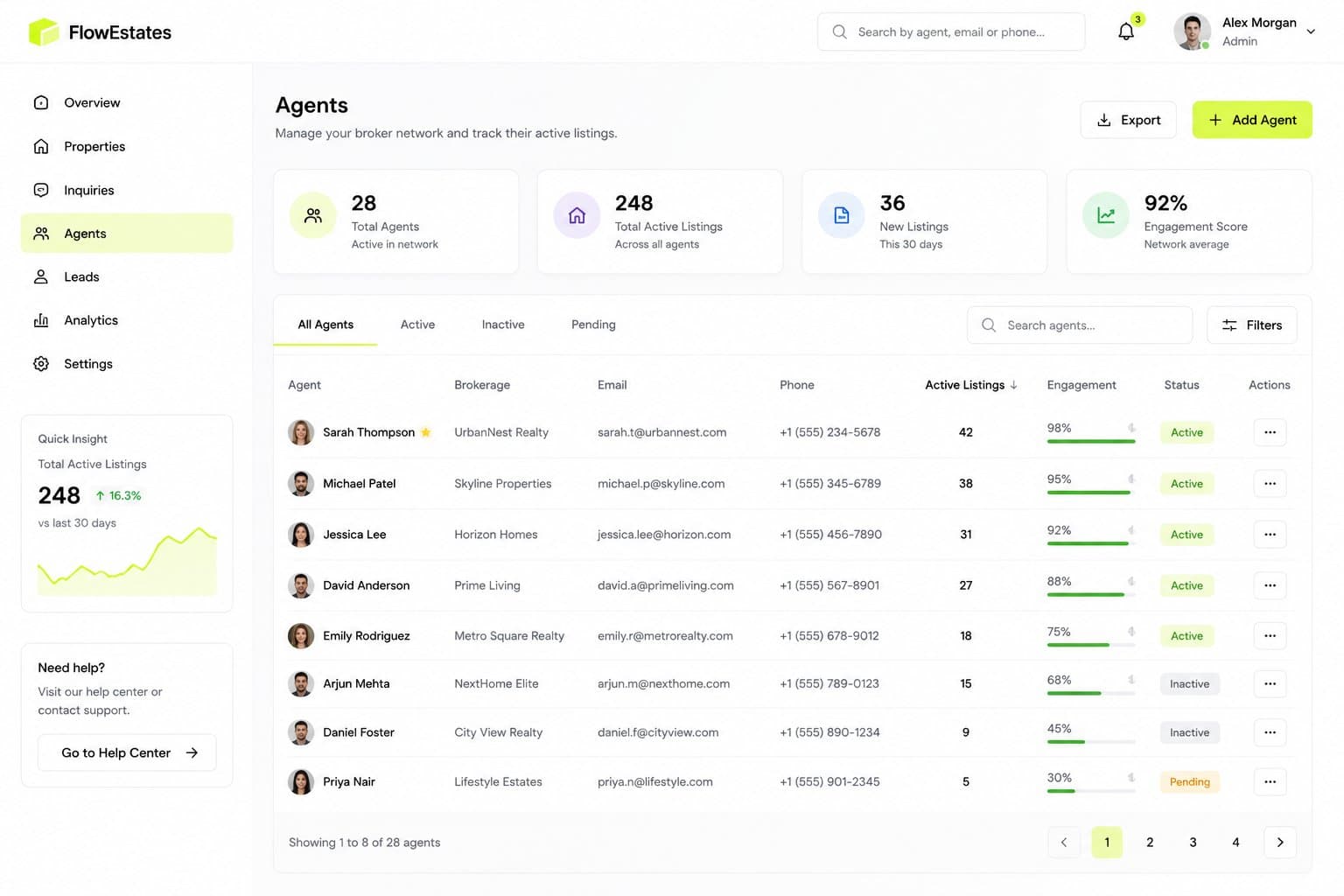
Per-agent listing management, team rosters, and lead assignment logic, built so an agent can update their own bio and active listings without filing a ticket.
Built on a modern, future-proof stack
Headless WordPress or a Next.js front end where the site needs to scale past a single office site, Strapi for structured listing and agent content that a marketing team can manage without touching code, and n8n handling the automation layer: new-listing alerts to a mailing list, lead routing between agents, CRM sync, and syndication triggers to Zillow or Realtor.com feeds. A RAG chatbot trained on your active listings and neighborhood data is a real option once the listing volume justifies it, not a default add-on.
Debatable: headless is the right call for a growing multi-office brokerage. For a single-agent site with fifteen listings, a well-built traditional WordPress site is faster to launch and cheaper to maintain, and headless would be overkill.
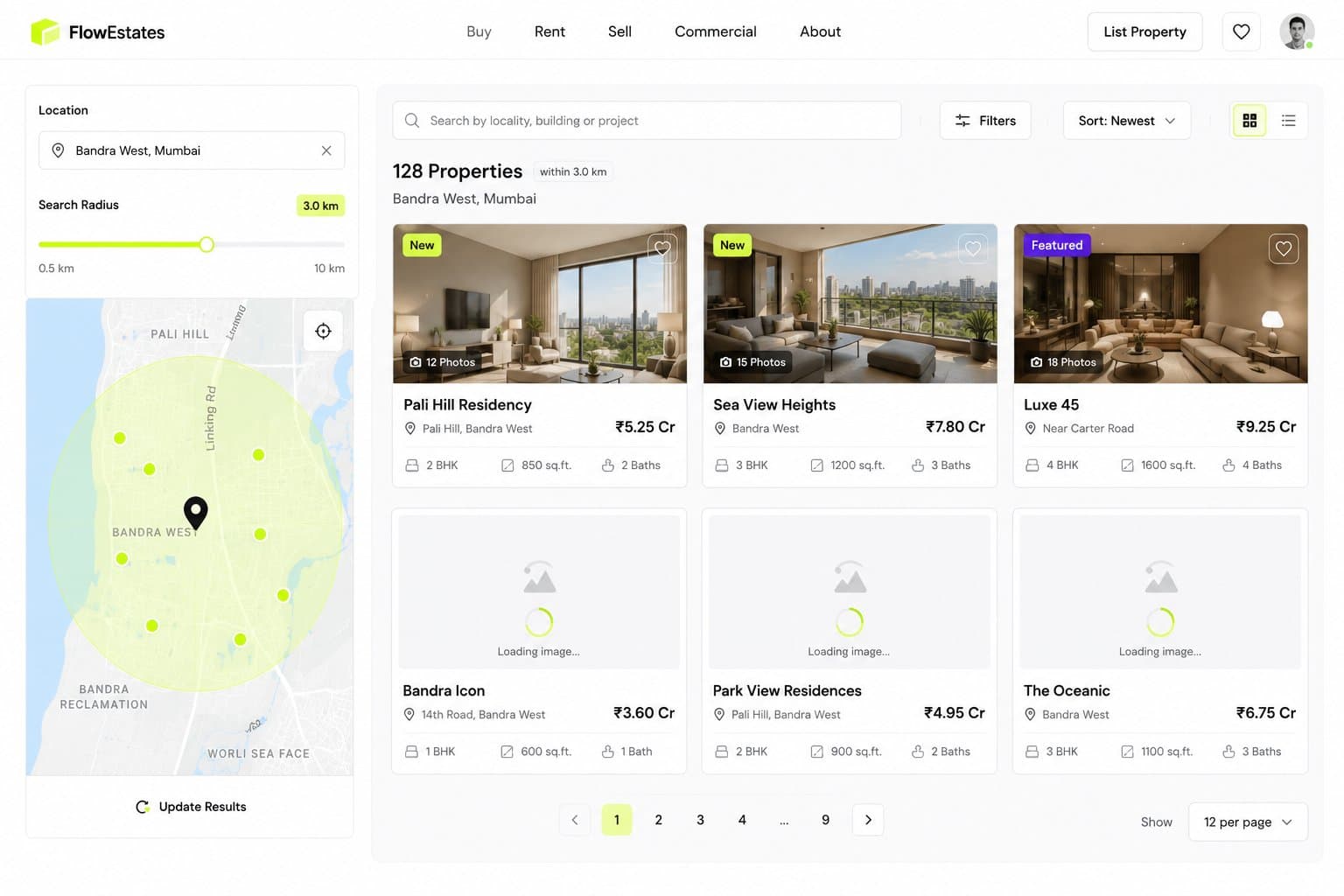
Core Values
Who this is for
01
Brokerages running multiple agents and an active MLS feed,
where listing volume and search performance actually matter to conversion.
02
Property management companies
juggling rental listings, tenant inquiries, and a CRM that the current site doesn't talk to.
03
Growing agencies with tool sprawl,
an MLS feed, a CRM, an email platform, and a scheduling tool that all currently run disconnected from the site and from each other.
04
Founders or brokers inheriting a half-built site,
where the IDX integration works but nothing else does, and finishing it properly beats starting over.
The qualifying line isn't revenue, it's integration depth: if your site needs to talk to an MLS feed, a CRM, and a lead-routing workflow at the same time, that's the complexity this is built for.
Why Flowagenz
Absolute code ownership.
No vendor lock-in. Full ownership of code, hosting access, and IDX integration credentials on handover. You can hire the developer who built it directly afterward if you want to; nothing here is designed to keep you dependent.
Based in Salem, Tamil Nadu.
Western-grade execution at offshore rates, stated plainly rather than hidden in the fine print.
Real overlap with US, UK, and Australia hours.
Async-first communication with committed live overlap windows for calls, not a vague promise of "great communication."
I default to mapping the IDX feed and building the search index before touching a single line of front-end design, because a beautiful listing page on top of a broken feed mapping is a rebuild waiting to happen.
Process
How it works
01
01
Scoping call.
We review your current MLS board, existing CRM, and any legacy site or IDX plugin already in place.
02
02
Feed mapping and architecture.
IDX/RESO or RETS integration gets mapped and tested against your live board data before any design work starts.
03
03
Build.
Front end, search, listing pages, and CRM/lead routing built on staging with review checkpoints, typically 4 to 8 weeks depending on integration depth.
04
04
QA and handover.
Cross-device testing, Core Web Vitals check on real listing-image weight, credentials and documentation handed over in full.
05
05
Post-launch support.
Available on a retainer basis if you want ongoing feed monitoring and feature additions; not required to keep the site running.
FAQ
Frequently Asked Questions
Everything you need to know about our process and digital systems.
Scope drives the number: a straightforward IDX-integrated brokerage site runs differently than one with a custom agent dashboard, RAG chatbot, and multi-CRM routing. As a rough bracket, a standard IDX-integrated build lands in the 1,50,000 to 6,00,000 INR ($1,800 to $7,200) range; multi-office or automation-heavy builds go higher. We scope on a call against your actual MLS feed and CRM, not off a generic "starting at" price.
Let's map your MLS feed
Tell us which MLS board and CRM you're running and we'll scope the integration on a call, no generic quote, no theme demo. If you're inheriting a half-finished IDX build, bring that too; we'll tell you honestly what's worth keeping.