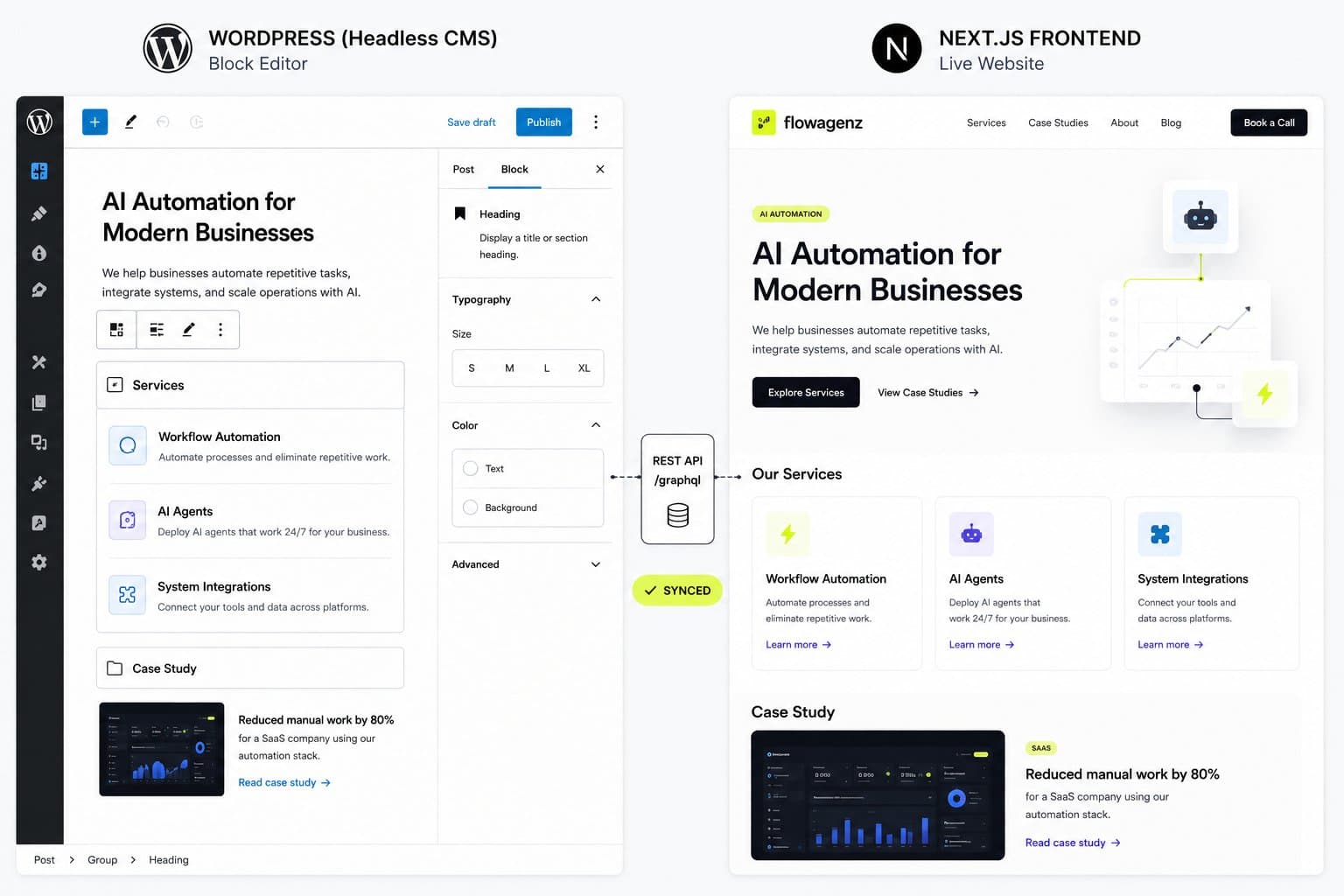
Your editors keep the WordPress block editor they already know. Your frontend runs on Next.js, React, or whatever your product actually needs, decoupled from theme constraints and plugin stacks that slow every deploy down.
Headless WordPress development for growing platforms
The problem, reframed
Most WordPress sites hit a ceiling the moment the business grows past a simple brochure site: page builders that fight custom design, plugin stacks that drag Core Web Vitals down, and a monolithic theme layer that makes every frontend change a WordPress change.
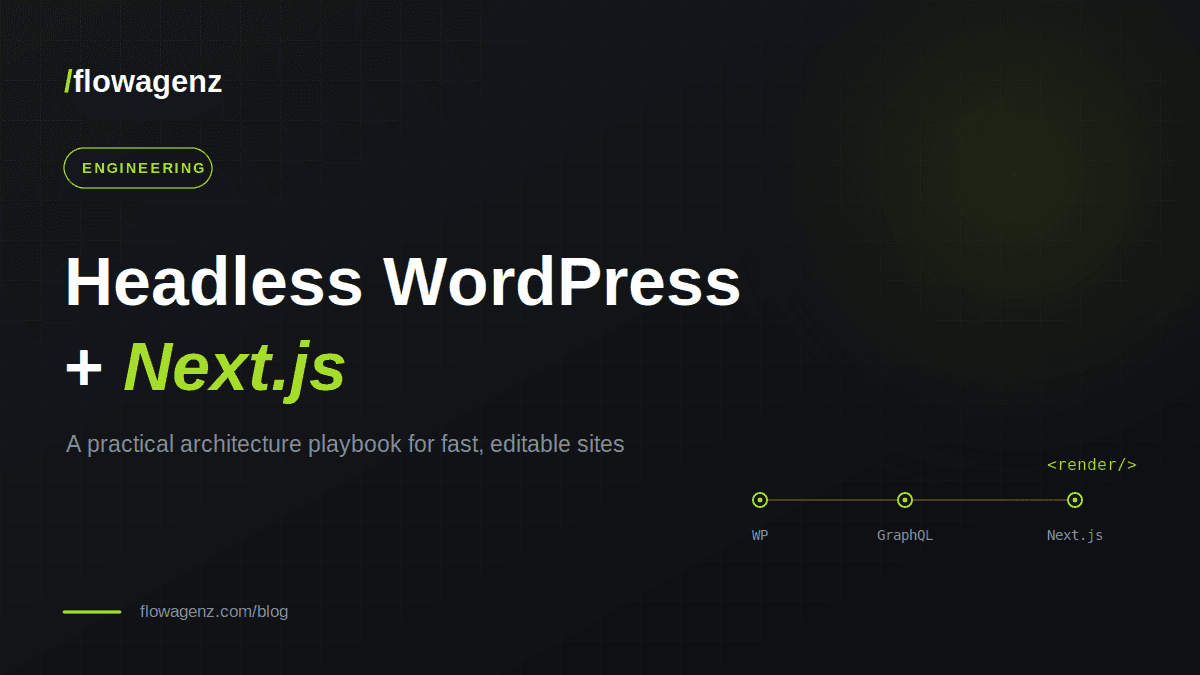
The real decision isn't "WordPress or not." It's whether your content team and your engineering team should be forced to share one codebase at all. Headless WordPress splits the two cleanly: WordPress stays the content source of truth through WPGraphQL or the REST API, and the frontend ships on its own stack, release cycle, and performance budget.
What we build
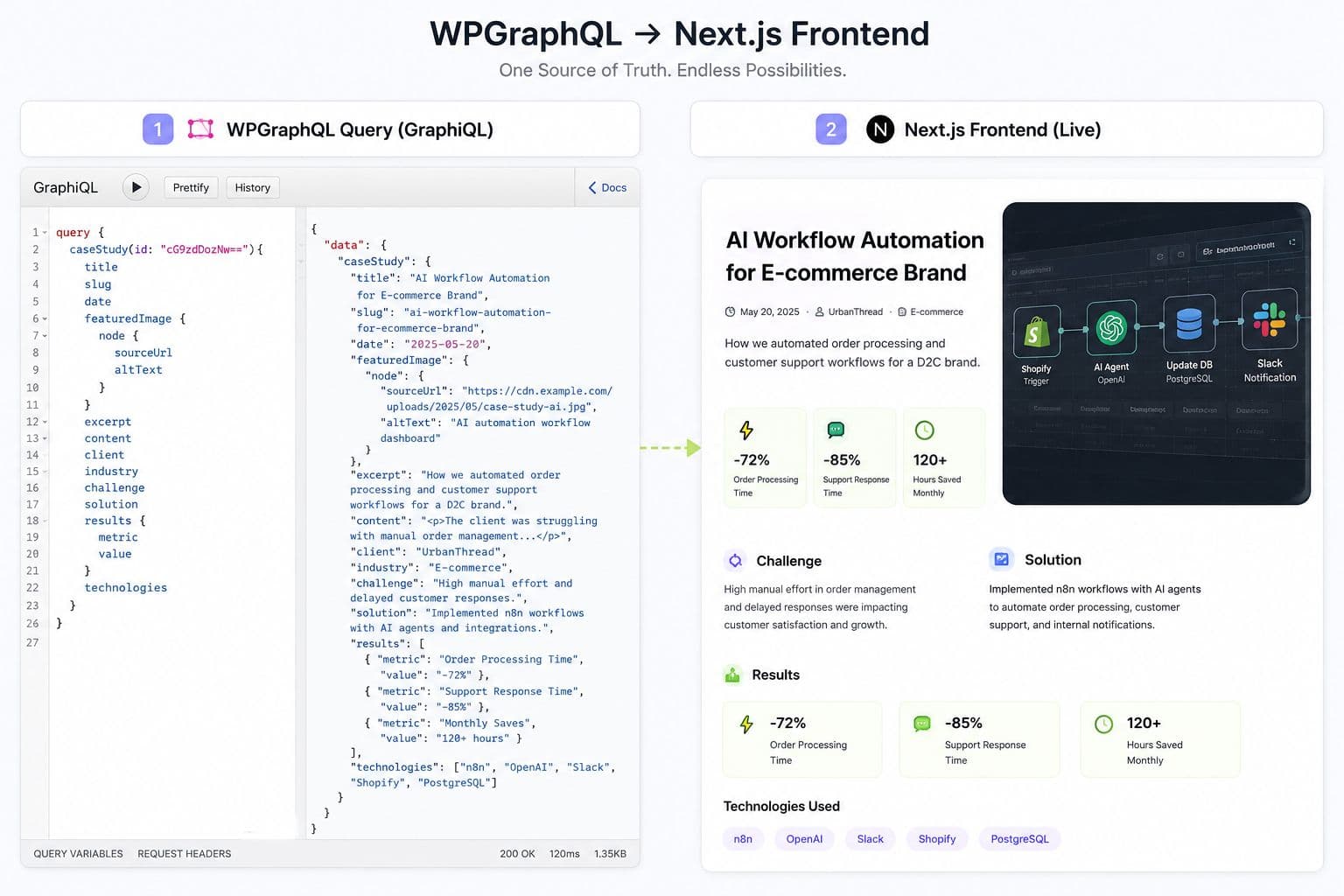
Decoupled architecture, WordPress as the content API. Content models, ACF flexible content layouts, and custom post types stay in WordPress. WPGraphQL or the REST API exposes them to a separate frontend, so editors keep the interface they're trained on without the frontend inheriting WordPress's runtime.
Next.js or React frontend, built for your actual product. Static generation or incremental static regeneration where content changes rarely, server-side rendering where it needs to be live. Preview mode wired up so editors see draft content rendered on the real frontend before publishing, not a generic WordPress preview screen.
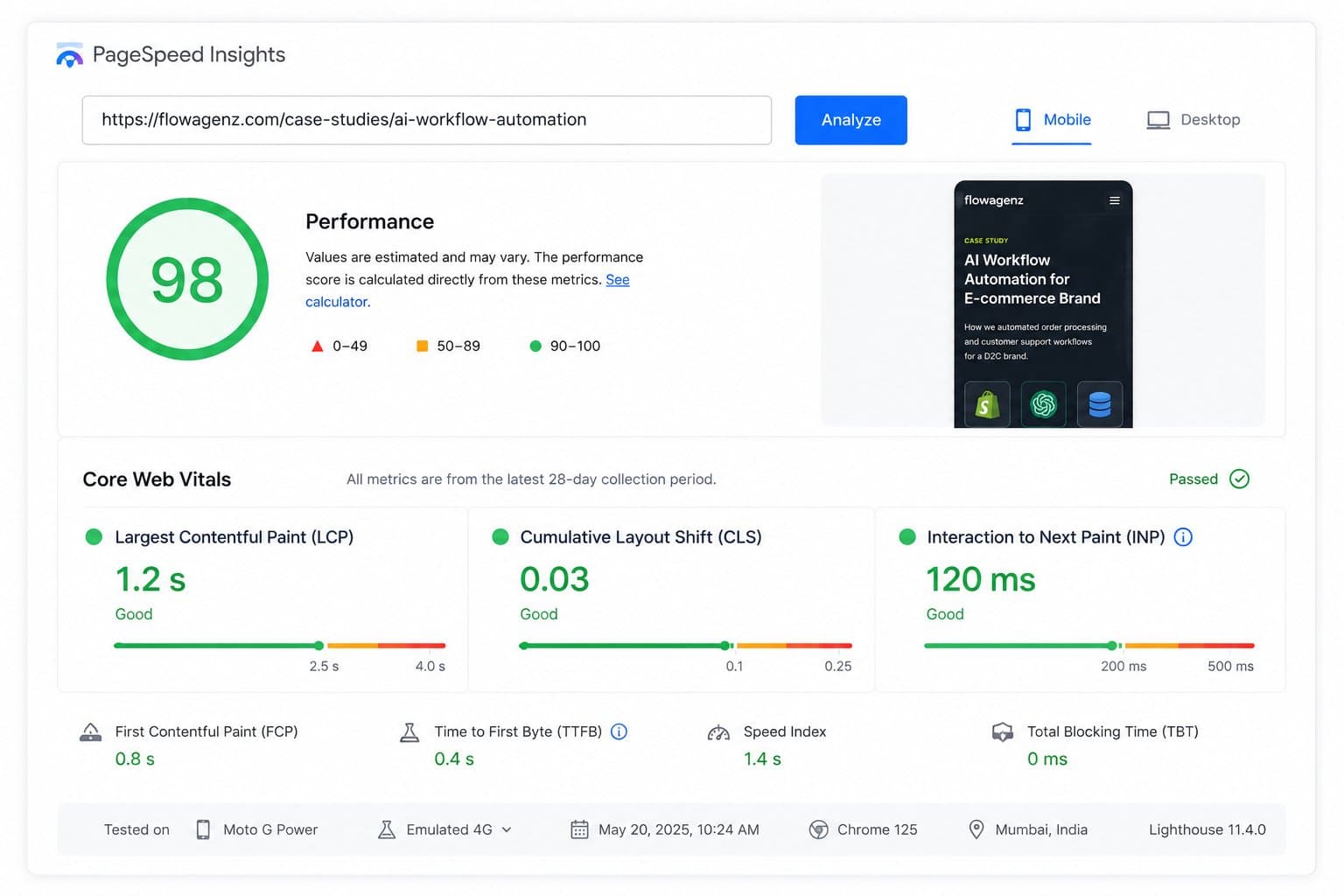
Core Web Vitals treated as a spec, not an afterthought. LCP, CLS, and INP targets set before build starts, not measured after launch and patched. Image pipelines, font loading, and hydration strategy chosen specifically to hit those numbers on the frontend framework in use, not inherited from a WordPress theme's defaults.
Schema and technical SEO carried over cleanly. Organization, Service, Article, and FAQ schema generated from the same WordPress content model and rendered server-side on the new frontend, so a headless migration doesn't cost you the structured data a themed WordPress site had by default.
Automation and integration layer where it earns its place. Webhook triggers from WordPress publish events into n8n workflows: syncing content to a CRM, notifying a Slack channel, kicking off a rebuild on a static host. Built when the workflow justifies it, not bolted on as a demo feature.
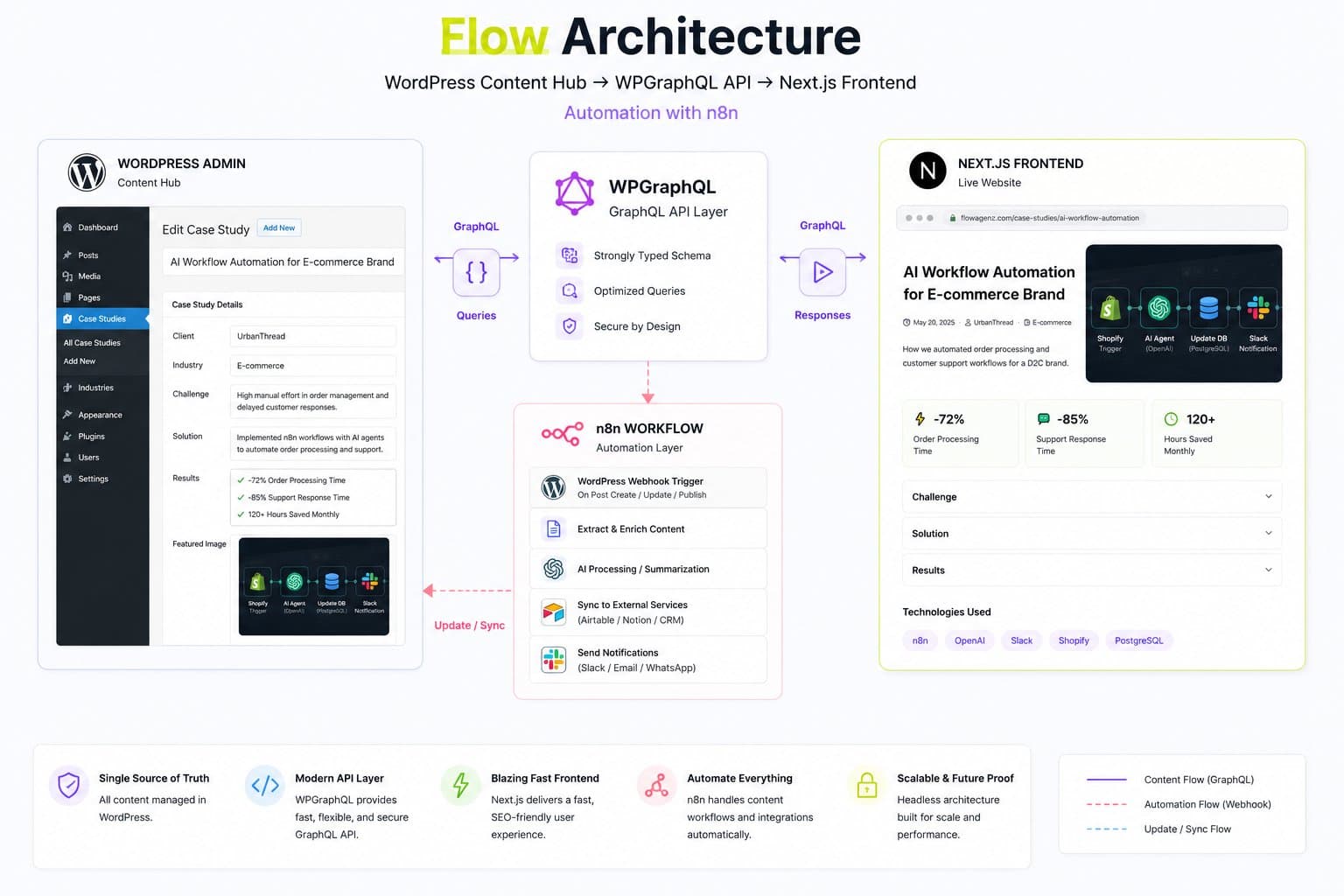
Built on a modern, future-proof stack
Headless WordPress is the starting point, not the ceiling. Depending on where your platform is headed, the same content layer can sit behind:
A Next.js frontend deployed on Vercel or a self-hosted Node server, your call on hosting, not ours.
Static export to any CDN for content that changes infrequently, with ISR for the pages that don't.
Strapi as an alternative headless layer if WordPress's admin isn't the right fit for a specific project.
n8n workflows connecting WordPress publish events to your CRM, ad platforms, or internal tools.
A RAG chatbot trained on your WordPress content for support or internal knowledge lookup, when the content volume justifies it.
I default to keeping WordPress as the CMS even in a headless setup unless there's a specific reason not to. Editors already know it, and WPGraphQL has matured enough that the API layer isn't the weak point it was a few years ago.
Who this is for
01
Growing businesses outgrowing a themed WordPress site.
Situations where page speed, design flexibility, or content-model complexity are starting to cost real conversions, regardless of exact revenue size.
02
Agencies needing white-label headless capacity.
You hold the client relationship, we build the decoupled architecture and hand it back under your name.
03
Startups shipping a custom marketing site fast.
Editors need to self-manage content from day one, and the frontend needs to match a specific design system, not a theme.
04
Teams inheriting a half-migrated headless project.
Someone started the WPGraphQL setup or the Next.js frontend and stalled. We pick up an existing schema and finish it rather than starting over.
Why Flowagenz
We're based in Salem, Tamil Nadu, and work directly with US, UK, and Australian clients on overlapping hours, not a handoff to a different time zone once the contract's signed. Async communication is standard between overlaps, so a question raised at the end of your day gets an answer before you're back online.
Every project ends in full ownership: source code, WordPress admin access, hosting credentials, all of it transfers on completion. No agency-controlled hosting, no dependency on us to make a content change six months later. If you want to hire the person who built it directly afterward, that's between you and them.
I write the content schema and API layer myself on every project rather than handing that decision to a template. The frontend framework choice depends on your team's actual comfort with maintaining it after handover, not on what's fastest for us to ship.
How it works
01
01
Scoping call.
We map your current WordPress setup, content model, and target frontend stack. No generic starting price quoted before we've seen the actual content structure.
02
02
Content API build.
WPGraphQL or REST endpoints configured against your real post types and ACF fields, tested against actual content, not placeholder data.
03
03
Frontend build.
Next.js or React frontend built against the API, with preview mode wired for editors before anything goes live.
04
04
Performance and schema pass.
Core Web Vitals measured against real targets, schema markup verified with Google's Rich Results Test.
05
05
Handover.
Code, credentials, and documentation transferred. Typical timeline: 3 to 6 weeks for a standard headless build, depending on content model complexity and integration count.
Related articles
FAQ
Frequently Asked Questions
Everything you need to know about our process and digital systems.
It depends on how many content types you have, how much custom frontend design work is involved, and whether you need integrations like a CRM sync or a chatbot layer. A straightforward headless marketing site typically runs 2,50,000 to 6,00,000 INR ($3,000 to $7,200). A more complex build with custom post types, multiple integrations, and a full design system runs higher. We give a real number after the scoping call, not a "starting at" figure that doesn't hold up once we see the actual scope.
Talk through a headless WordPress build
If your WordPress site has hit its design or performance ceiling, or you've got a stalled headless migration that needs finishing, we'll look at the actual content model and frontend requirements on a call before quoting anything. Get in touch to scope it.